
Why Your Online Business Needs a Central Website
If your online business lacks a central website, your work stays scattered.
You may have social followers, email contacts, affiliate links, and useful tools.
You may even have traffic flowing through several different platforms.
But there is one uncomfortable question worth asking.
Why does my online business need a central website or hub?
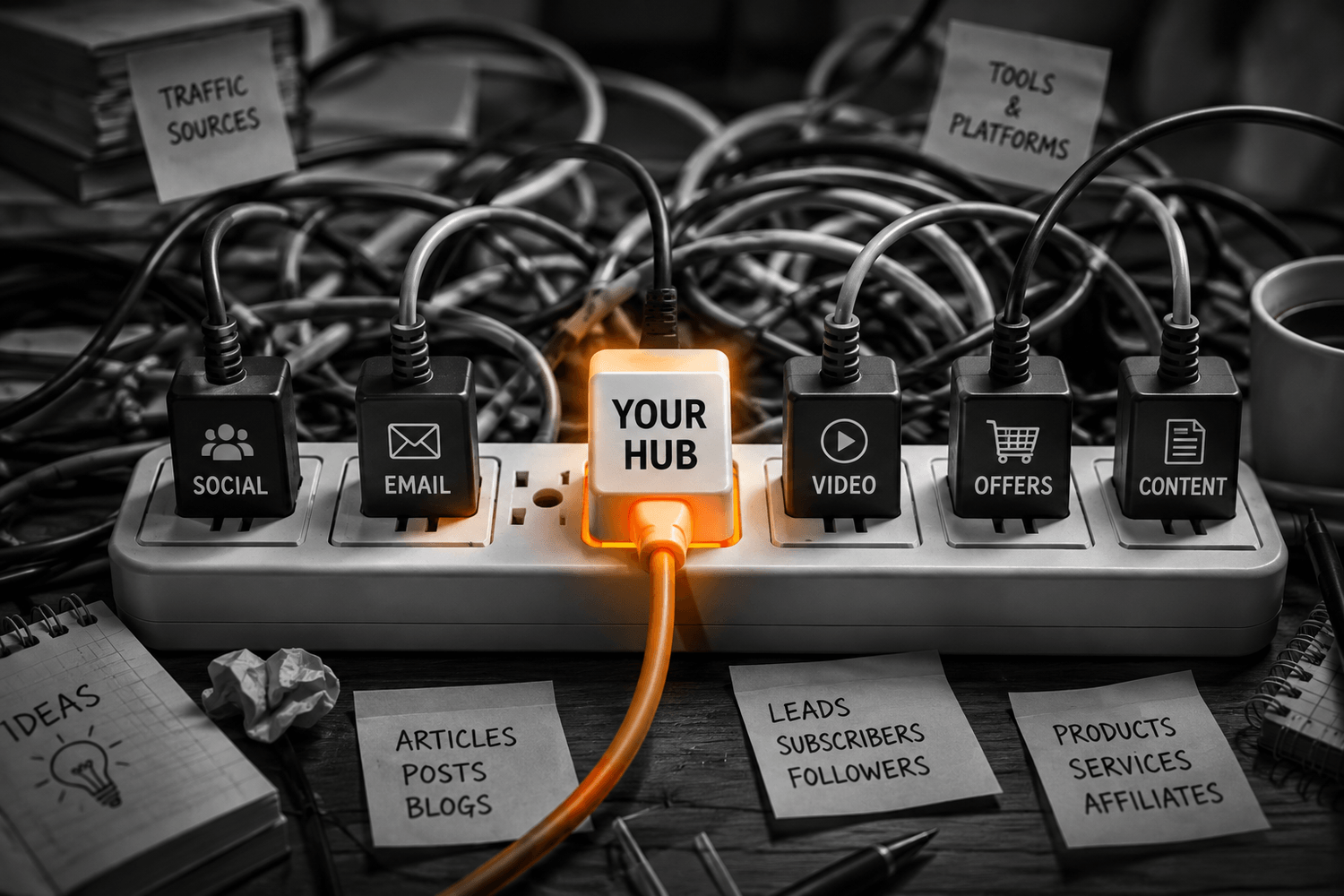
A central website gives your online business one place you control. It connects your content, audience, email list, and offers.
Instead of rebuilding around each platform, your work can accumulate over time. This reduces platform dependence and helps create a long-term digital asset.
That question matters because building a website requires more work.
You might wonder whether another platform creates another unnecessary job.
Maybe Facebook already connects you with people every day. Maybe YouTube already gives your videos somewhere useful to live.
Maybe your affiliate company already provides professional pages and sales funnels.
So why bother building something else?
That skepticism makes sense because your time has real value. Nobody wants another online project that produces nothing useful.
But there is another way to examine this decision.
Forget whether owning a central website is technically the “right” strategy.
Instead, compare what happens when either decision proves wrong.
That changes the entire question.
The biggest risk may not involve building something unnecessary. The bigger risk may involve never building something you control.
Why Building Your Own Website Can Feel Unnecessary
Imagine someone who has already tried several online business ideas. They have joined programs, built funnels, and posted across social platforms.
They have watched platforms disappear and opportunities lose momentum.
Now somebody tells them they need their own central website.
Their first thought might be perfectly reasonable.
“Why should I spend more time building another thing?”
They imagine weeks of technical work and endless website maintenance. They picture hosting bills, plugins, updates, and complicated design problems.
More importantly, they fear another distraction from making actual progress.
They have already learned that new tools rarely solve old problems. That makes their skepticism healthy rather than foolish.
They believe existing platforms can handle everything they currently need.
Facebook provides an audience. YouTube hosts videos. Systeme.io can handle funnels and email.
An affiliate program can provide sales pages and tracking.
Each tool performs a specific job inside an online business. So the skeptic sees little reason for adding another layer.
But this argument quietly assumes something important.
It assumes those separate pieces will remain available and connected.
That assumption deserves closer examination.
The question is not whether those platforms work today. The question is what your online effort leaves behind tomorrow.
Think about everything you create during one ordinary year online.
You write posts, answer questions, create videos, and build relationships.
You recommend useful products and discover better ways of explaining things.
You might collect email subscribers and attract search traffic.
Where does all that accumulated work actually live?
If it lives entirely elsewhere, somebody else controls its foundation.
That does not make those platforms bad or unreliable.
It simply creates a dependency you cannot completely control.
A central online business hub reduces that dependency. And dependency changes the risk calculation.
What You Gain From a Central Website for Your Business
Suppose the central website argument turns out completely correct.
You decide to build one simple website around your online activity.
Your social posts can point toward it. Your videos can lead visitors there.
Your articles can answer questions people already search for. Your email messages can link readers toward useful resources there.
Your recommendations can sit beside explanations that provide useful context.
Slowly, those separate activities begin supporting the same central asset.
A Facebook post no longer disappears without leaving anything behind. It can send someone toward an article you still control later.
A YouTube video becomes more than another isolated piece of content. It can introduce someone to your wider body of useful information.
An email becomes more than one message inside somebody’s inbox. It can bring readers back into an environment you have shaped.
Your online activity begins connecting instead of constantly restarting.
That creates several practical gains.
- Your content gains one permanent home.
- Your audience knows where to find you.
- Your recommendations gain useful context.
- Your brand becomes easier to understand.
- Search engines can discover your useful content.
- Older articles can continue attracting new readers.
- New opportunities can connect with existing work.
- Your email list gains a central destination.
- Your business becomes less dependent on one platform.
None of these benefits require huge traffic numbers.
They simply require your work to accumulate somewhere useful.
That word matters: accumulate.
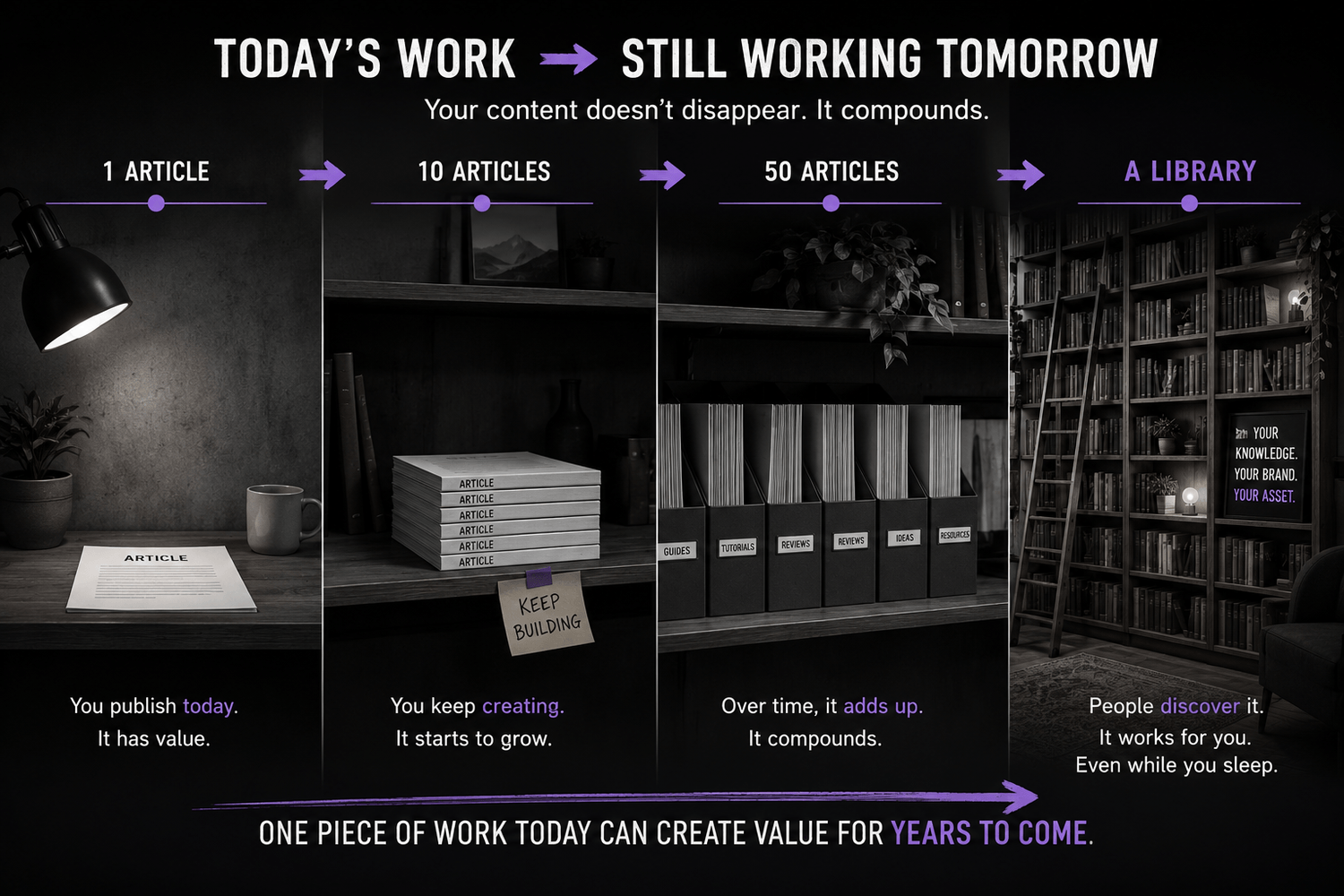
Imagine publishing fifty helpful articles across several social platforms.
Most will quickly disappear beneath newer posts and changing feeds.
Now imagine those same fifty ideas living on your own website.
Article number fifty does not replace article number one. Instead, article number fifty joins everything you previously created.
Someone discovering you today can still find something written months earlier.
Your previous work remains available to support your current work.
That is how an online presence starts behaving differently. It begins acting less like activity and more like an asset.
What Happens When You Build on Platforms You Don't Control
Suppose the central website argument is right, but you ignore it.
You continue building your business entirely across other people’s platforms.
Nothing terrible needs to happen for this decision to become expensive.
That point matters.
Facebook does not need to close. YouTube does not need to disappear.
Your affiliate company does not need to fail.
The platforms simply need to keep doing what platforms always do.
They evolve.
Algorithms change. Organic reach changes. Advertising costs change. Policies change.
Companies merge, rebrand, restrict accounts, or discontinue products.
Your own interests can change too.
Perhaps today you promote one affiliate program enthusiastically.
Two years later, another product might fit your audience better.
Without a central website, that change can mean another restart.
New landing page. New messaging. New traffic source. New content. New audience building.
New explanation about who you are and what you provide.
You keep rebuilding the same foundation around different opportunities.
That hidden rebuilding cost can grow over several years.
The lost money might remain small. The lost time becomes much harder to replace.
Imagine spending three years creating useful online content.
Then imagine discovering that almost nothing connects those years together.
You have activity everywhere but little online business infrastructure.
Your old posts sit inside feeds people rarely search.
Your affiliate pages belong to programs you no longer promote.
Your best explanations sit inside emails new visitors cannot discover.
Your videos point toward offers that have already changed.
You worked. You learned. You created.
But much of that effort cannot easily support your next move.
That is the permanent loss skepticism can hide.
You cannot recover yesterday’s time.
You cannot rebuild years of search history overnight.
You cannot instantly recreate relationships built through consistent useful content.
You cannot give years of old work a permanent home afterward.
The work was not completely wasted. You still gained experience, knowledge, and practical skills.
But your business captured less lasting value from that work. That is the real risk.
What If Your Online Business Doesn't Need a Website?
Now examine the opposite outcome fairly.
Suppose building a central website was unnecessary after all.
You spend time creating one anyway.
What have you actually lost?
Perhaps you paid for a domain and basic hosting.
Maybe you spent several weekends arranging pages and publishing content.
You probably learned some basic website and content skills.
You created an About page explaining what you actually stand for.
You organized your best ideas into useful categories.
You connected your offers and resources in one logical place.
You learned which subjects attract interest and which get ignored.
Then you eventually decide the website was not essential.
That is hardly catastrophic.
You can stop publishing. You can redirect the domain.
You can reuse the articles elsewhere.
You can move your email list.
You can repurpose your research into videos or social posts.
You can even rebuild or completely reposition the website.
The downside remains limited and mostly reversible.
Now compare that with the opposite mistake.
Suppose a central online business hub really matters over ten years.
You wait eight years before building one.
Those eight years cannot be recreated.
That difference creates the real imbalance.
One mistake costs some money, effort, and learning time.
The other can cost years of accumulated digital value.
Why Owning Your Online Presence Reduces Business Risk
Most people do not buy insurance because disaster feels certain.
They buy insurance because one possible outcome carries serious consequences.
A central website can serve a similar strategic purpose.
It does not guarantee traffic.
It does not guarantee sales.
It does not protect you from every platform change.
It does not magically turn weak content into valuable content.
It simply reduces one important business risk.
It gives your online activity somewhere you can keep building.
Consider a simple example.
Imagine Sarah builds her entire audience through one social media account.
She posts daily and grows a respectable following over four years.
Another person, Mark, follows exactly the same strategy.
But Mark also publishes his strongest ideas on his website.
Both use social media. Both benefit from the platform.
Both build relationships there.
Then their social reach drops sharply.
Sarah still owns her skills and relationships.
But reaching her audience suddenly becomes much harder.
Mark faces the same problem.
However, Mark also has four years of searchable website content.
His email subscribers know where his main resources live.
Other websites may already link toward his articles.
Search engines may already send visitors toward older pages.
His website cannot replace every lost social visitor.
But Mark has options Sarah never built.
That difference is what risk management creates.
You do not build protection because failure feels certain. You build protection because uncertainty exists.
How a Website Connects Social Media, Email, and Content
Building your own website does not mean abandoning social platforms.
It does not mean avoiding useful software or affiliate systems.
Those tools can remain incredibly useful.
The difference concerns the role each tool plays.
Social media can help people discover you.
YouTube can help people understand you.
Email can help you stay connected.
Affiliate platforms can process referrals and track commissions.
Funnels can guide visitors toward specific actions.
Your central website connects those separate pieces.
Think of it as your online home address.
You still visit other places.
You still build relationships elsewhere.
You simply stop treating rented spaces as your permanent headquarters.
This also removes pressure from your website.
It does not need every feature immediately.
You can begin with five simple pieces:
- A homepage explaining what your site helps people understand.
- An About page explaining your point of view.
- Several useful articles answering real questions.
- An email signup connecting visitors with future content.
- A resources page containing tools you genuinely recommend.
That is enough to create a foundation.
You can improve everything later.
The goal is not building the perfect website.
The goal is creating somewhere your effort can start accumulating.
Why Your Website Can Become a Long-Term Digital Asset
Online business often encourages constant motion.
New offer. New platform. New funnel. New traffic source.
New software. New strategy.
Every new opportunity can feel like progress.
But activity and ownership are different things.
You can stay incredibly busy while building little lasting value.
That does not make short-term opportunities bad.
Some can create income, contacts, experience, and useful skills.
The problem appears when nothing connects those experiences together.
Your central website can become that connecting layer.
Today you might write about building an online audience.
Tomorrow you might discover a useful tool worth recommending.
Next year, your main affiliate opportunity might completely change.
Your website can evolve without forcing another complete restart.
The domain remains.
Your content remains.
Your email connection remains.
Your growing body of knowledge remains.
Most importantly, your identity does not depend on one opportunity.
You become the connecting point.
The programs become things you use, test, recommend, or replace.
That difference becomes increasingly valuable as your experience grows.
This is also why I view my own online presence differently now.
LifeBuiltSmart is where I’m putting that idea into practice.
I do not want every new opportunity to require another restart.
I want each useful article to support what I build next.
That approach does not promise quick results.
It simply gives my work a place to remain useful.
Why Platform Dependence Creates a Bigger Long-Term Risk
You should remain skeptical about online business advice.
The internet contains enough exaggerated promises to justify that instinct.
A central website should never be sold as guaranteed success.
It cannot guarantee rankings, visitors, leads, sales, or income.
Its value comes from something much simpler.
You gain a place where your work can remain connected.
Building a central website still carries some risk.
You might spend time creating something that grows slowly.
You might publish articles that attract almost nobody initially.
You might change your design several times.
You might eventually decide another strategy works better.
Those costs remain manageable.
Now compare them with never building anything you control.
Years of content could remain scattered across temporary platforms.
Your audience could remain tied to systems you cannot control.
Each new opportunity could require rebuilding your positioning again.
Your strongest ideas could disappear beneath endless social feeds.
Your previous effort might provide little leverage for your next move.
That outcome deserves more concern than an imperfect website.
You do not need to believe a central hub guarantees success.
It cannot.
You only need to recognize the difference between two risks.
One risk involves building something less valuable than expected.
The other means never building something that could grow for years.
Those risks are not equal.
How to Start Building Your Central Online Business Hub
You do not need fifty articles before launching your website.
You do not need expensive software or a perfect design.
You do not need to become a technical expert.
Start with one useful home base.
Explain clearly what you care about.
Publish answers to questions your audience already asks.
Connect your email list.
Link your best videos.
Share tools and opportunities that genuinely deserve attention.
Then keep adding useful pieces.
One article becomes ten.
Ten articles become fifty.
One subscriber can become part of a growing audience.
One useful resource becomes a library.
Nothing guarantees those numbers will grow quickly.
But now your work has somewhere to collect.
The next post can support something you already created.
The next email can revive an article from last year.
The next opportunity can enter an ecosystem that already exists.
You stop asking every new idea to build everything again.
That may be the strongest reason for having a central website.
Not because websites are always better.
Not because social platforms are dangerous.
Not because one strategy fits every online business.
The reason is simpler.
The downside of building your own hub remains limited.
The downside of needing one later can become permanently expensive.
A central website gives your online business somewhere to keep building.
It can change, grow, move, or even take another direction.
Years spent building only on rented platforms cannot be reclaimed.
Start your central website now, and make your next piece of content build something you control.

LifeBuiltSmart
WHERE I TURN MY ONLINE EFFORT INTO
AN ASSET
One place for my content, audience, tools,
and opportunities worth sharing.
Created with ©systeme.io